
LORABOX
LoRa & wM-Bus Pulse Module
for diaphragm gas meters
LORABOX is a battery-powered pulse module with LoRaWAN and Wireless M-Bus for diaphragm gas meters with a reed/magnet pulse output – configurable via Bluetooth, with up to 15 years of battery life.
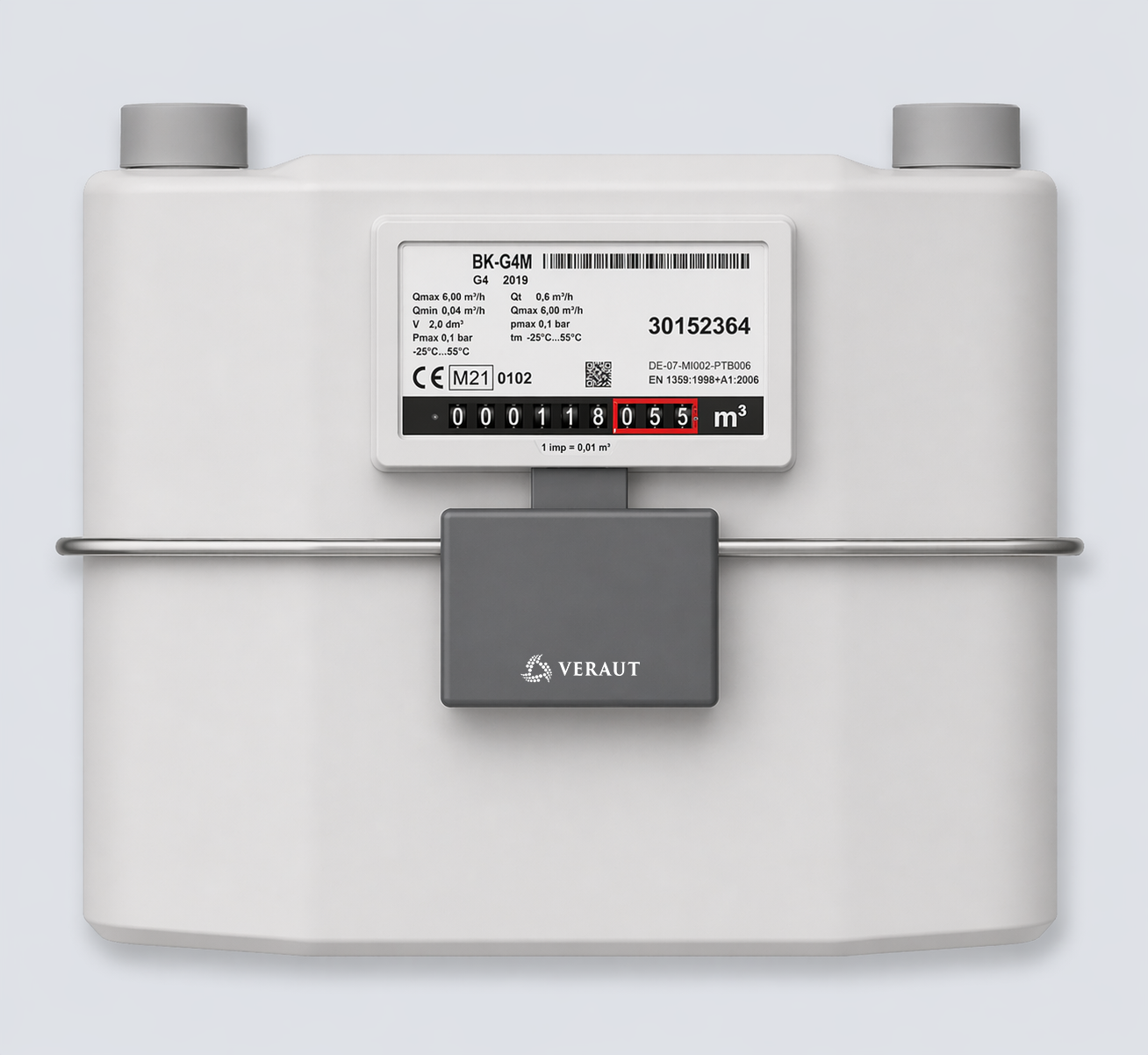
veraut-lorabox-zaehler.jpghourly transmission
in parallel
no device opening
gas-approved
Pulse meter reading used to be rigid.
It no longer has to be.
One device.
Two protocols. For any pulse meter.
LORABOX combines LoRaWAN and Wireless M-Bus in a single, battery-powered device. Both protocols run in parallel – the same metering data over two independent transmission paths. Configuration is done via Bluetooth, with no physical access to the device required.
Long range.
Low power. Broad ecosystem.
LoRaWAN is an open low-power WAN standard from the LoRa Alliance – designed for long-range, battery-powered sensor applications with small data volumes. Unlike cellular IoT, LoRaWAN requires access to gateway infrastructure, either via a public network operator or via your own private deployment.
Long range at low transmit power
Typical range: several kilometers in urban areas, considerably more in rural areas – at moderate transmit power. Enables reliable meter reading across distributed infrastructure.
Private networks – full operational control
Run your own LoRaWAN network with your own gateways and network server. No carrier dependency, no recurring SIM costs, full control over data routing and security.
Broad network ecosystem
Several public LoRaWAN networks available across Europe – The Things Network, Helium, Swisscom, Deutsche Telekom and regional operators. LORABOX integrates with any LoRaWAN-compliant network server via OTAA or ABP.
Dual protocol – wM-Bus T1 as a complement
LoRaWAN handles cloud transmission; wM-Bus T1 simultaneously enables walk-by and drive-by reading. One device, two independent transmission paths – greater resilience and deployment flexibility.
LoRaWAN requires network infrastructure.
Choose the deployment model that fits.
LORABOX communicates over LoRaWAN in the 868 MHz ISM band – which means the device needs access to LoRaWAN gateway infrastructure to transmit data to the cloud. Three common deployment models, each with its own trade-offs in cost, control and coverage – plus a practical note on gateway density in real-world utility environments.
Engineered for long-term, stable
pulse meter reading.
What other pulse data loggers don’t offer – and why it matters for your rollout.
LORABOX –
technical specifications.
A single device for pulse-based diaphragm gas meter reading – combining two radio protocols, Bluetooth configuration and long-life battery power in an Ex Zone 2 approved housing.
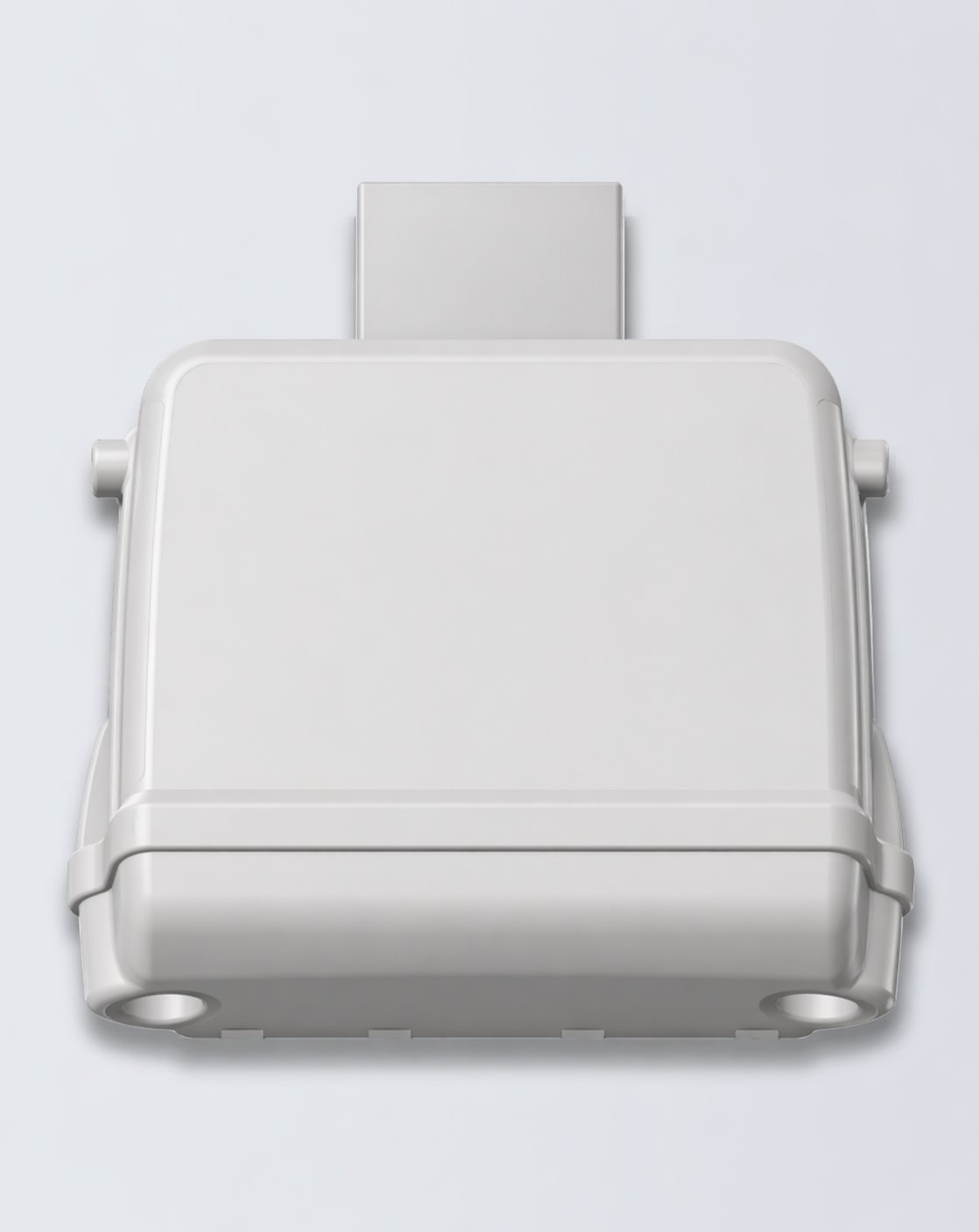
veraut-lorabox-modul.jpgBattery-powered pulse module for diaphragm gas meters (Elster, Fiorentini) with a reed/magnet pulse output. Simultaneous LoRaWAN and Wireless M-Bus transmission, Bluetooth LE 6.0 configuration and Ex II 3G Ex ic IIB T4 Gc approval – designed for reliable operation over 15+ years.
Drop-in mounting
on diaphragm gas meters.
veraut-lorabox-zaehler.jpgLORABOX mounts directly onto the pulse output of common diaphragm gas meters – for example from Elster and Fiorentini. Suitable mounting adapters are available for common diaphragm gas meters (including Fiorentini G4, Elster EK-G4 and others on request). No meter replacement required, no intervention in the gas path, no supply interruption.
Built for
real-world metering points.
LORABOX is designed for the specific needs of gas utilities – including Ex Zone 2 metering, walk-by fallback and large-scale pulse-based rollouts.
Technical questions –
direct answers.
When will LORABOX be available?
How long does the battery really last?
Which pulse meters are supported?
Do LoRaWAN and wM-Bus work simultaneously?
Do I need my own gateways?
How is data security ensured?
How does Bluetooth configuration work?
Is the device approved for explosive atmospheres?
Interested in
LORABOX?
Talk to our metering specialists about your rollout plans. We are happy to discuss pilot projects, technical integration and early-access evaluations ahead of the Q2/Q3 2026 launch window.