LORABOX – LoRa & wM-Bus Pulse Module for Gas Meters | VERAUT
Expected launch · Q2/Q3 2026 LoRaWAN · wM-Bus · Bluetooth configuration · Gas · Ex Zone 2

LORABOX
LoRa & wM-Bus Pulse Module
for diaphragm gas meters

LORABOX is a battery-powered pulse module with LoRaWAN and Wireless M-Bus for diaphragm gas meters with a reed/magnet pulse output – configurable via Bluetooth, with up to 15 years of battery life.
15+ years battery Dual protocol Ex Zone 2 approved
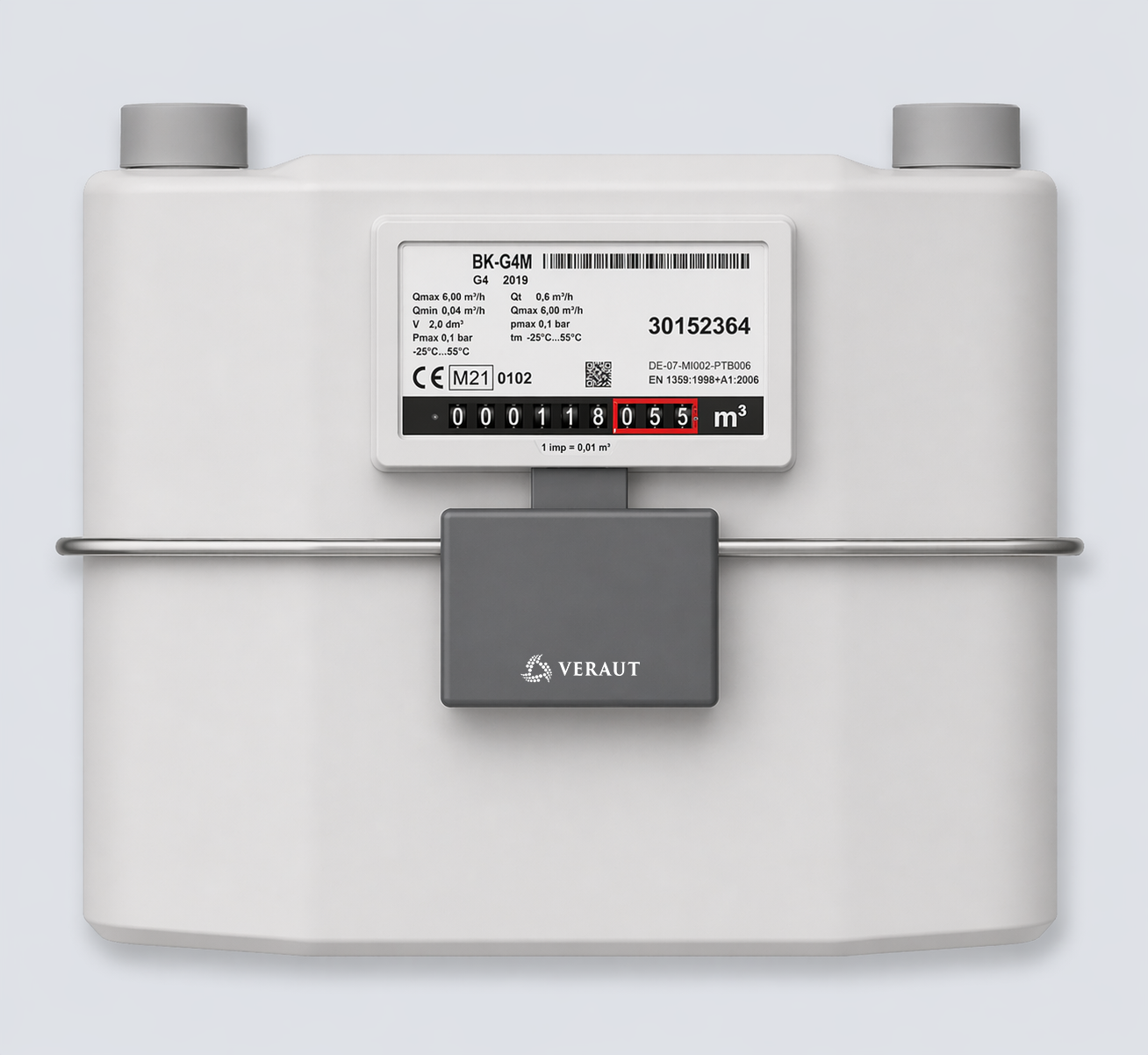
LORABOX pulse module mounted on an Elster BK-G4M diaphragm gas meter
Foto hier ablegen:
veraut-lorabox-zaehler.jpg
LORABOX · Elster BK-G4M
LoRaWAN uplink
wM-Bus walk-by
BLE config
0+ yrs
Battery life at
hourly transmission
2× RF
LoRaWAN + wM-Bus
in parallel
BLE 6.0
Bluetooth config –
no device opening
Ex Zone 2
II 3G Ex ic IIB T4 Gc
gas-approved
LoRaWAN-ready · 1.0.4 · EU868 wM-Bus T1 · to EN 13757-4 OMS 4.5.1 profile BLE 6.0 configuration Li-SOCl₂ 3.6 V 15+ years battery AES-128 E2E IP65 Elster EK-G4 Fiorentini G4 OTAA & ABP −25 °C … +55 °C
The challenge

Pulse meter reading used to be rigid.
It no longer has to be.

Without LORABOX
Manual walk-by reading – high labor effort
Cable-based configuration – device must be opened on site
Single protocol – dependent on one network
Separate devices for LoRaWAN and wM-Bus rollouts
Short battery life (5–8 years) – frequent replacements
Data gaps on gateway outage – no local buffer
Fixed transmission interval – not adjustable in the field
No Ex approval – not suitable for gas applications
With LORABOX
Automatic hourly transmission – no labor effort
Bluetooth LE 6.0 configuration – no opening, no cable
Dual protocol: LoRaWAN + wM-Bus T1 on a single device
One device for cloud rollouts and walk-by scenarios
15+ years battery life on Li-SOCl₂ 3.6 V
Local data buffer + automatic retransmission
Pulse input for reed/magnet contact directly at the meter
Ex II 3G Ex ic IIB T4 Gc – approved for gas applications
Product concept · live data flow

One device.
Two protocols. For any pulse meter.

LORABOX combines LoRaWAN and Wireless M-Bus in a single, battery-powered device. Both protocols run in parallel – the same metering data over two independent transmission paths. Configuration is done via Bluetooth, with no physical access to the device required.

🔥Gas meter1× DI pulse LORABOXDual-protocol core Gateway Cloud / API 🚶Walk-bydrive-by reader LoRaWAN ↑ wM-Bus T1 ↓
LoRaWAN cloud path wM-Bus walk-by path Single battery-powered device
LoRaWAN-ready · OTAA + ABP
Based on LoRaWAN specification 1.0.4 in the EU868 band. Supports OTAA and ABP activation – compatible with any compliant network server (TTN, Helium, Swisscom, Deutsche Telekom, private LNS). AES-128 end-to-end encryption.
wM-Bus T1 · to EN 13757-4 / OMS 4.5.1 profile
Wireless M-Bus in T1 mode for walk-by and fixed-receiver scenarios. Built to EN 13757-4 and the OMS 4.5.1 profile – the standard profile for gas metering in Europe.
BLE 6.0 configuration
Bluetooth Low Energy for wireless parameterization. Transmission interval, LoRaWAN keys, pulse parameters and diagnostics configurable via smartphone or tablet – no opening, no cable, no impact on the installed seal.
Li-SOCl₂ · 15+ years
Lithium-thionyl-chloride battery 3.6 V – designed for 15+ years of operation at hourly transmission. Energy-optimized electronics and low quiescent currents under typical field conditions.
A single digital pulse input (1× DI) for the meter’s reed contact or magnet pulse. Pulse weighting (pulse→meter value), meter reading, meter number and transmission interval are configurable via the Bluetooth app.
LoRaWAN technology

Long range.
Low power. Broad ecosystem.

LoRaWAN is an open low-power WAN standard from the LoRa Alliance – designed for long-range, battery-powered sensor applications with small data volumes. Unlike cellular IoT, LoRaWAN requires access to gateway infrastructure, either via a public network operator or via your own private deployment.

Long range at low transmit power

Typical range: several kilometers in urban areas, considerably more in rural areas – at moderate transmit power. Enables reliable meter reading across distributed infrastructure.

Private networks – full operational control

Run your own LoRaWAN network with your own gateways and network server. No carrier dependency, no recurring SIM costs, full control over data routing and security.

Broad network ecosystem

Several public LoRaWAN networks available across Europe – The Things Network, Helium, Swisscom, Deutsche Telekom and regional operators. LORABOX integrates with any LoRaWAN-compliant network server via OTAA or ABP.

Dual protocol – wM-Bus T1 as a complement

LoRaWAN handles cloud transmission; wM-Bus T1 simultaneously enables walk-by and drive-by reading. One device, two independent transmission paths – greater resilience and deployment flexibility.

Gateway 🔥 🔥 🔥 distributed LORABOX meters
868
MHz ISM band
km
range, rural
1×/h
uplink standard
Deployment & infrastructure

LoRaWAN requires network infrastructure.
Choose the deployment model that fits.

LORABOX communicates over LoRaWAN in the 868 MHz ISM band – which means the device needs access to LoRaWAN gateway infrastructure to transmit data to the cloud. Three common deployment models, each with its own trade-offs in cost, control and coverage – plus a practical note on gateway density in real-world utility environments.

A
Public LoRaWAN network
Use of a public network operator – The Things Network, Helium, Swisscom, Deutsche Telekom or regional providers. No gateways to install, no network server to operate, no infrastructure on the utility side.
Note: Coverage depends on the operator’s network footprint at the specific metering point. Typical pricing is via per-device monthly fees or per-message models; network quality rests with the operator, not with you.
B
Private LoRaWAN network
Operate your own LoRaWAN gateways and your own network server (ChirpStack, The Things Stack on-premises). Full control over data routing, no carrier dependency, no per-device fees. Suitable for utilities with their own OT/IT infrastructure.
Note: Upfront gateway investment, RF planning for coverage and ongoing infrastructure maintenance on your side. Expanding to new service areas requires additional gateways. Operating costs over the 15-year device lifetime are a real planning factor.
C
Hybrid: LoRaWAN + wM-Bus walk-by
Combine public or private LoRaWAN for cloud transmission with wM-Bus T1 as a walk-by fallback. LORABOX transmits on both protocols in parallel from the same device – useful during rollout transitions or in areas with incomplete LoRaWAN coverage.
Note: Added operational effort from two parallel reading paths. Walk-by collection still requires field staff – far less often than full manual reading, but not without effort.
D
Coverage & gateway density in basements
Diaphragm gas meters are often installed in basements, meter pits and utility rooms. LoRa signals must penetrate walls and ceilings there – in practice this means a gateway density of roughly 500–1,000 m spacing, depending on building structure and density. Across large-scale utility rollouts this adds up to a considerable number of gateway sites.
Note: Each base station needs permanent power, an uplink connection and a suitable mounting location. Across many sites, acquisition, installation, maintenance and ongoing operating costs add up noticeably – a significant item in the total cost of ownership over the device lifetime.
Not sure which model fits your rollout? Talk to our metering specialists — we support coverage analysis, gateway planning and total cost of ownership for your service area.
Why VERAUT

Engineered for long-term, stable
pulse meter reading.

What other pulse data loggers don’t offer – and why it matters for your rollout.

01
Dual protocol: LoRaWAN + wM-Bus T1
Both protocols in one device, running in parallel – LoRaWAN to the cloud and wM-Bus T1 for walk-by and fixed receivers. No duplicate hardware, no forced protocol switch, no stranded assets. One device fits cloud-first rollouts, walk-by deployments and hybrid scenarios alike.
Typical market solution: separate devices per protocol, separate inventory, forced protocol migration.
02
15+ years battery life
Li-SOCl₂ 3.6 V battery combined with energy-optimized electronics and low quiescent current. At hourly LoRaWAN + wM-Bus transmission the device reaches 15+ years of operation under typical field conditions – no battery replacement within the normal service cycle.
Typical market solution: 5–8 years battery life, frequent replacements within the service cycle.
03
Bluetooth configuration – no device opening
BLE 6.0 wireless parameterization via smartphone or tablet. Transmission interval, LoRaWAN credentials, pulse settings and diagnostics – all accessible without opening the housing, without cables, without compromising the IP65 seal or Ex approval. Faster installation, no compromise on field integrity.
Typical market solution: cable-based or contact-based configuration requires opening the device on site.
04
Ex Zone 2 approved for gas applications
Ex II 3G Ex ic IIB T4 Gc approval – suitable for Zone 2 gas metering environments. Covers intrinsic-safety requirements for gas transfer stations, diaphragm gas meters and distribution-grid metering points. An intrinsically safe module for gas metering in the distribution grid.
Typical market solution: separate certified variants or no Ex approval – gas applications require dedicated hardware.
Product

LORABOX –
technical specifications.

A single device for pulse-based diaphragm gas meter reading – combining two radio protocols, Bluetooth configuration and long-life battery power in an Ex Zone 2 approved housing.
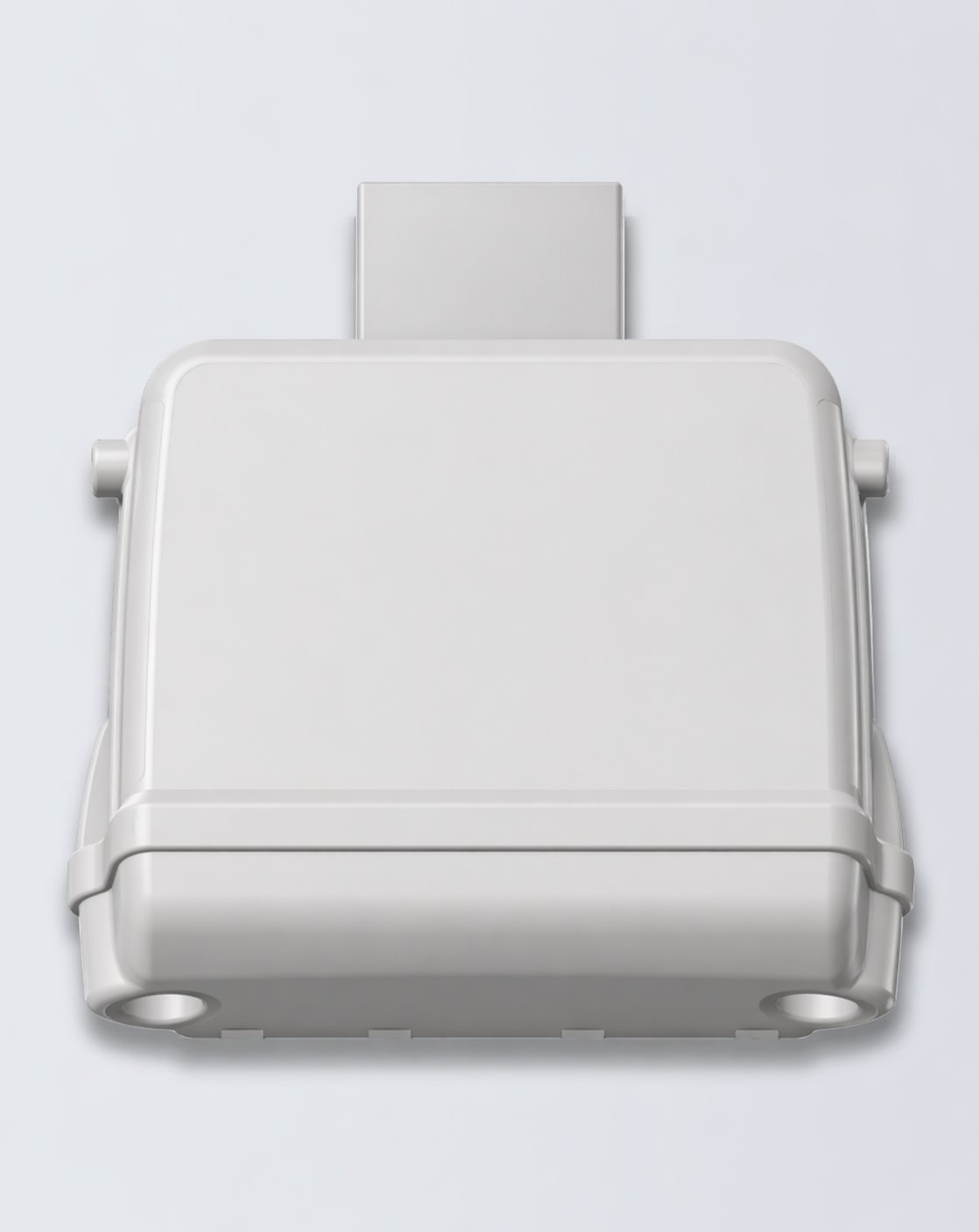
LORABOX pulse module, standalone
Foto hier ablegen:
veraut-lorabox-modul.jpg
LORABOX module
LoRaWAN & wM-Bus · pulse input · Ex Zone 2
LORABOXLaunch Q2/Q3 2026

Battery-powered pulse module for diaphragm gas meters (Elster, Fiorentini) with a reed/magnet pulse output. Simultaneous LoRaWAN and Wireless M-Bus transmission, Bluetooth LE 6.0 configuration and Ex II 3G Ex ic IIB T4 Gc approval – designed for reliable operation over 15+ years.

⏱ Transmission interval configurable
Ex II 3G Ex ic IIB T4 GcLoRaWAN-readywMBus T1BLE 6.0Reed/magnet contact (1× DI)Li-SOCl₂ 3,6 V15+ years batteryIP65
🔗
Dual-protocol radio
LoRaWAN (per specification 1.0.4) and wM-Bus T1 in parallel – one device covers cloud transmission and walk-by reading at the same time.
📱
Bluetooth configuration
BLE 6.0 wireless parameterization via the VERAUT mobile app – no opening, no cable, no breach of the Ex seal.
Pulse input (reed / magnet)
A single digital pulse input (1× DI) for reed-contact or magnet pulses from the meter. Pulse weighting (pulse→meter value), meter reading and meter number configurable via the Bluetooth app.
🛡️
Ex Zone 2 approved
Ex II 3G Ex ic IIB T4 Gc – intrinsic safety for gas transfer stations, diaphragm meters and distribution-grid use.
🔋
15+ years battery life
Li-SOCl₂ 3.6 V · hourly transmission as standard, transmission interval adjustable up or down.
Datasheet ↗  Download →
Radio specifications
LoRaWANready · per spec 1.0.4 (EU868)
LoRaWAN activationOTAA & ABP
wM-BusT1 · to EN 13757-4
wM-Bus profileOMS 4.5.1 profile
BluetoothBLE 6.0 (configuration)
Frequency (LoRa/wM-Bus)868 MHz
Frequency (BLE)2.4 GHz
EncryptionAES-128 (E2E)
Pulse input & alarms
Input1× DI (magnet / reed)
Signal typePulse / reed contact
Pulse weightingConfigurable (pulse→meter value)
Set meter readingVia app
AlarmsTamper · removal · battery
Power & environment
BatteryLi-SOCl₂ 3.6 V
Battery life (1× / h)15+ years
Operating temperature−25 °C to +55 °C
Ingress protectionIP65
Ex classificationII 3G Ex ic IIB T4 Gc
Integration
BackendVERILOG Dashboard
Payload formatJSON / binary
Cloud interfacesMQTT · REST · webhook
Data hostingEU data centers · GDPR
AvailabilityLaunch Q2/Q3 2026
Installation

Drop-in mounting
on diaphragm gas meters.

LORABOX mounted on the pulse output of a diaphragm gas meter
Foto hier ablegen:
veraut-lorabox-zaehler.jpg
1
2
Mounted detail · BK-G4M

LORABOX mounts directly onto the pulse output of common diaphragm gas meters – for example from Elster and Fiorentini. Suitable mounting adapters are available for common diaphragm gas meters (including Fiorentini G4, Elster EK-G4 and others on request). No meter replacement required, no intervention in the gas path, no supply interruption.

1
Choose the right adapter
Mounting adapters for common diaphragm gas meters – including Fiorentini G4, Elster EK-G4 and others on request. Direct mounting without an adapter is also possible depending on the meter type.
2
Mount on the meter
Direct attachment to the meter’s pulse output. No tools required beyond the standard mounting kit.
3
Configure via Bluetooth
Open the VERAUT mobile app, connect via BLE 6.0, enter LoRaWAN keys, set the transmission interval, check pulse values. No device opening required.
4
Verify data reception
The first LoRaWAN uplink occurs within minutes. Data appears in the VERILOG dashboard or via MQTT/REST in your backend. Installation complete.
Applications

Built for
real-world metering points.

LORABOX is designed for the specific needs of gas utilities – including Ex Zone 2 metering, walk-by fallback and large-scale pulse-based rollouts.

🔥
Gas · AMR · Ex Zone 2
Gas meter remote reading (diaphragm meters)
Remote reading of residential and commercial gas meters with a reed-contact output. Ex II 3G Ex ic IIB T4 Gc approval covers gas transfer stations and distribution-grid metering points. Hourly consumption data enables usage analysis without on-site visits.
Gas AMRReed contactEx Zone 2Diaphragm meter
🧩
Gas · meter compatibility
Elster & Fiorentini diaphragm gas meters
Designed for common diaphragm gas meters from Elster and Fiorentini with a reed/magnet pulse output. Suitable mounting adapters (including Fiorentini G4, Elster EK-G4 and others on request) enable retrofitting of the installed base – without meter replacement and without intervention in the gas path.
ElsterFiorentiniG4 adapterRetrofit
📡
Private LoRaWAN
Utility-owned LoRaWAN networks
Operate your own LoRaWAN network with your own gateways and network server. LORABOX integrates with any LoRaWAN-compliant infrastructure – no carrier dependency, no recurring SIM costs, full operational control over data routing and device fleet.
Private LNSOTAA / ABPTTN / ChirpStack
🚶
Hybrid · wM-Bus fallback
Hybrid deployment: LoRaWAN + walk-by
LoRaWAN handles cloud transmission while wM-Bus T1 enables parallel walk-by and drive-by reading. Useful during rollout transitions, in areas without reliable LoRaWAN coverage, or as a diagnostic fallback for operations.
wMBus T1Walk-byDrive-byDual path
🛡️
Tamper protection
Tamper & removal detection
For utility rollouts with tamper-security requirements: LORABOX reports magnetic tampering (tamper), removal or disconnection from the meter, and battery status in the uplink. Bluetooth configuration means installation without opening the device – with no compromise to IP65 or Ex certification.
Tamper alarmRemovalBattery statusBLE config
🏗️
Rural / distributed
Rural networks & distributed infrastructure
The long range of LoRaWAN suits distributed infrastructure with low metering-point density – remote gas stations, rural gas distribution networks, municipal metering across large service areas. Fewer gateways needed than with other LPWAN options.
Long rangeRuralLow density
Frequently asked questions

Technical questions –
direct answers.

When will LORABOX be available?
The expected launch window is Q2/Q3 2026. Pilot projects and early-access evaluations can be discussed ahead of general availability – please get in touch if you are planning a rollout in this timeframe.
How long does the battery really last?
At hourly transmission under typical field conditions, LORABOX reaches 15+ years of operation on a Li-SOCl₂ 3.6 V cell. Energy-optimized electronics and low quiescent currents keep average consumption low. The transmission interval is configurable and directly affects battery life.
Which pulse meters are supported?
LORABOX has a single digital pulse input (1× DI) for the meter’s reed contact or magnet pulse – designed for the pulse output of diaphragm gas meters. The Bluetooth app lets you set pulse weighting (pulse→meter value), meter reading, meter number and meter size. This covers gas meters as well as other meters with a reed/pulse output.
Do LoRaWAN and wM-Bus work simultaneously?
Yes. Both radio paths run in parallel on the same device with the same metering values – LoRaWAN handles cloud transmission, wM-Bus T1 enables walk-by and drive-by reading. Both share the 868 MHz antenna via an internal RF switch. Every transmission cycle is energy-optimized and respects the 1% duty-cycle limit at 868 MHz.
Do I need my own gateways?
LoRaWAN fundamentally requires gateway infrastructure. You either use a public LoRaWAN network (TTN, Helium, Swisscom, etc.) or operate your own private network. For meters in basements and pits, a gateway density of roughly 500–1,000 m spacing is common in practice – coverage planning is an important part of the rollout. Details and trade-offs are in our deployment section.
How is data security ensured?
LoRaWAN transmission is end-to-end encrypted with AES-128 (NwkSKey + AppSKey) – the network server never sees application data in clear text. wM-Bus T1 payloads are encrypted to the OMS standard. Bluetooth configuration uses BLE 6.0 with pairing and authentication. Data is hosted in European data centers in a GDPR-compliant manner.
How does Bluetooth configuration work?
LORABOX provides a BLE 6.0 configuration service. The VERAUT mobile app connects via Bluetooth, authenticates and lets you set the transmission interval, LoRaWAN keys and pulse parameters, and read out diagnostic data – without opening the device, without cables, without breaching the IP65 seal or Ex certification.
Is the device approved for explosive atmospheres?
Yes. LORABOX is approved as Ex II 3G Ex ic IIB T4 Gc – suitable for Zone 2 (gas) environments. This covers gas transfer stations, diaphragm gas meters in residential and commercial installations, and distribution-grid metering points. Intrinsic safety covers all normal operating conditions – with no need for flameproof enclosures.
Next step

Interested in
LORABOX?

Talk to our metering specialists about your rollout plans. We are happy to discuss pilot projects, technical integration and early-access evaluations ahead of the Q2/Q3 2026 launch window.

Expected launch: Q2/Q3 2026

Get in touch with VERAUT

Purpose of contact